
Intrinsicly evisculate emerging cutting edge scenarios redefine future-proof e-markets demand line
Gallery Posts


Intrinsicly evisculate emerging cutting edge scenarios redefine future-proof e-markets demand line
Published by Skaleit LLC — skaleitcllc.com
Every business wants to show up on the first page of Google but very few actually understand what it takes to get there in 2026. Search engines have changed dramatically over the past few years: AI-generated content floods the web, Google’s algorithm has become far better at spotting shortcuts, and ranking factors that used to work (like keyword stuffing or buying backlinks) can now actively hurt a website instead of helping it.
This guide breaks down what SEO actually means today, the factors that matter most, and a practical roadmap any business — local or international can follow to grow organic traffic sustainably.
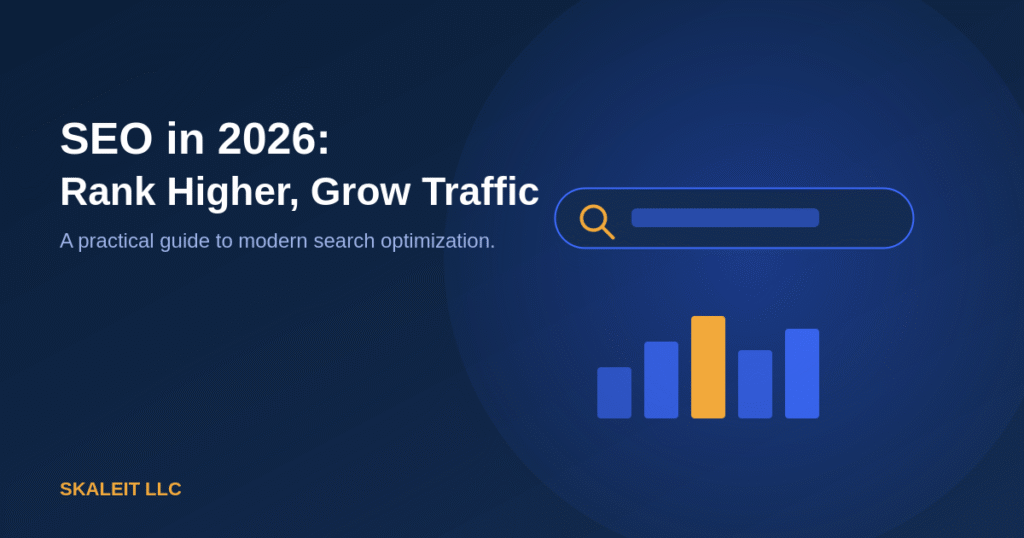
Search Engine Optimization (SEO) is the practice of improving a website so that search engines like Google can understand it, trust it, and show it to the right people at the right time. It’s not a single trick or a one-time task it’s an ongoing combination of:
Ranking well today means succeeding across all four areas at once. A site can have perfect content but still fail to rank if it loads slowly or isn’t mobile-friendly, and a fast, well-built site can still underperform if the content doesn’t actually answer what people are searching for.
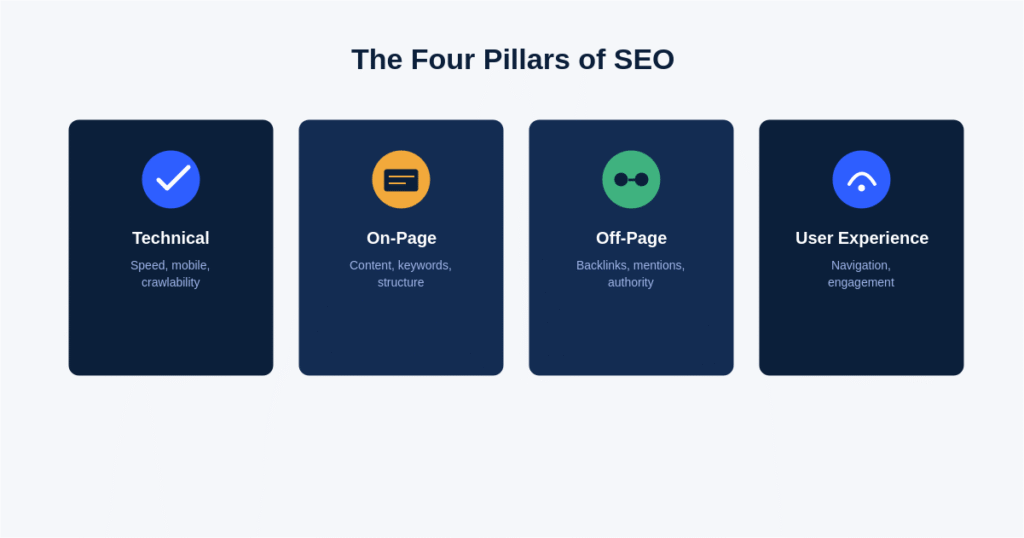
Before content or keywords matter, a website needs to be technically sound. Google prioritizes:
A technically weak website is like a beautifully written book with missing pages and a jammed spine — no matter how good the content is, people (and search engines) struggle to get through it.
Content quality standards have risen sharply. With so much AI-generated content online, Google has adjusted its systems to reward material that shows real expertise, first-hand experience, and genuine usefulness often summarized as E-E-A-T (Experience, Expertise, Authoritativeness, Trustworthiness).
What this looks like in practice:
Keyword stuffing repeating a phrase unnaturally throughout a page — no longer helps and can actively look spammy to both readers and Google’s systems. The goal is writing naturally for the person reading it, while still using the terms they’d actually search for.
Instead of only asking “what keyword should I target?”, modern SEO asks “what is the person actually trying to accomplish?” Search intent generally falls into a few categories:
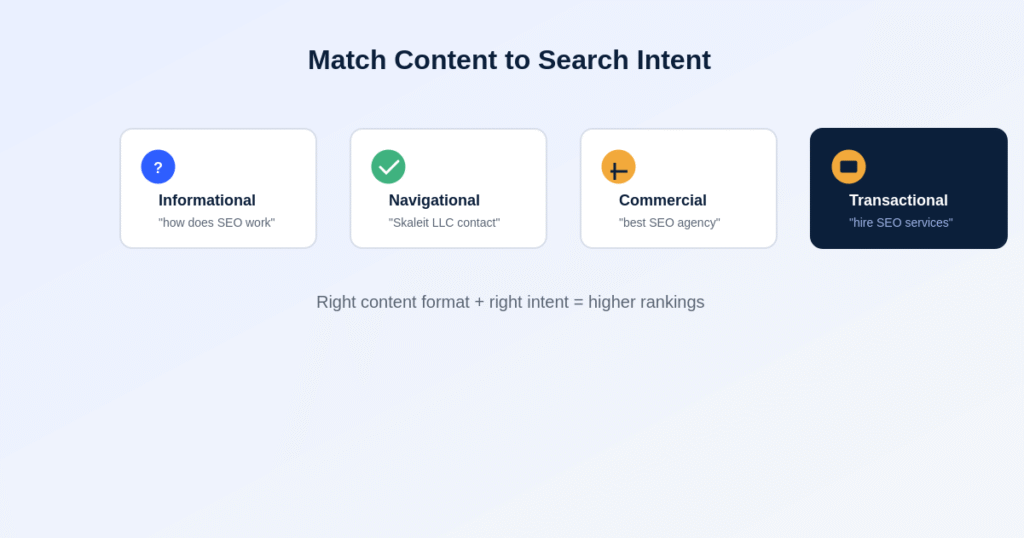
A page built for the wrong intent for example, a hard sales page targeting an informational search will struggle to rank even with the right keyword in the title. Matching content format and depth to intent is one of the highest-leverage things a business can do.
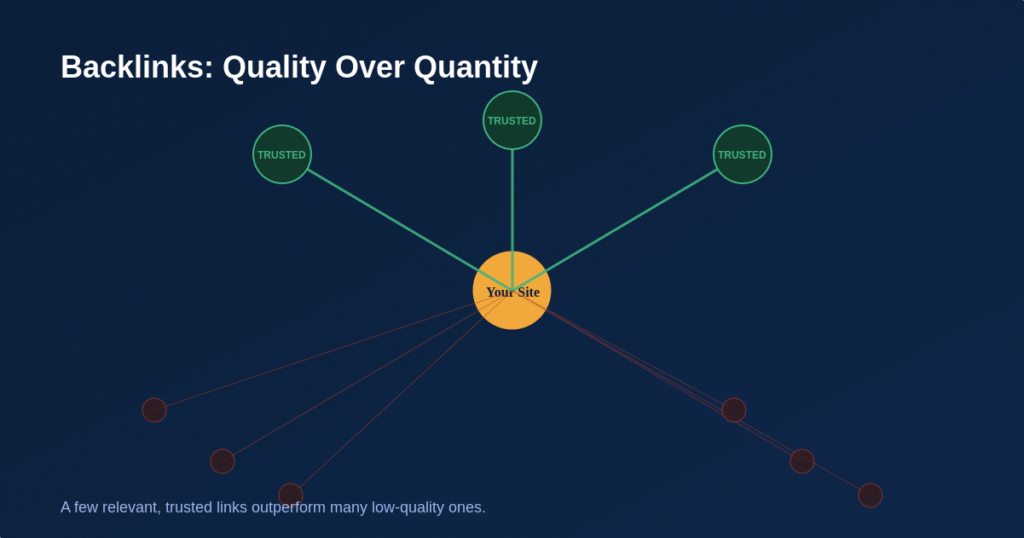
Backlinks (other websites linking to yours) remain one of the strongest trust signals for search engines. However, the old approach of acquiring hundreds of low-quality links is not just ineffective now it can trigger penalties. What works instead:
A handful of links from trusted, relevant sites will outperform a large volume of links from low-quality or unrelated sources every time.
For businesses serving a single city, local SEO — optimizing a Google Business Profile, gathering reviews, and targeting location-based keywords — is critical. For businesses serving clients across countries, the priorities shift:
Trying to rank for “best web development company” without narrowing the audience is extremely competitive globally; more specific, intent-matched pages usually perform far better than broad, generic ones.
Google’s AI-generated overviews now appear above traditional search results for many queries, and more searches are ending without a click at all. This has shifted SEO strategy in two important ways:
SEO in 2026 isn’t just about ranking a blue link anymore; it’s about being the source that both people and AI systems trust enough to reference.
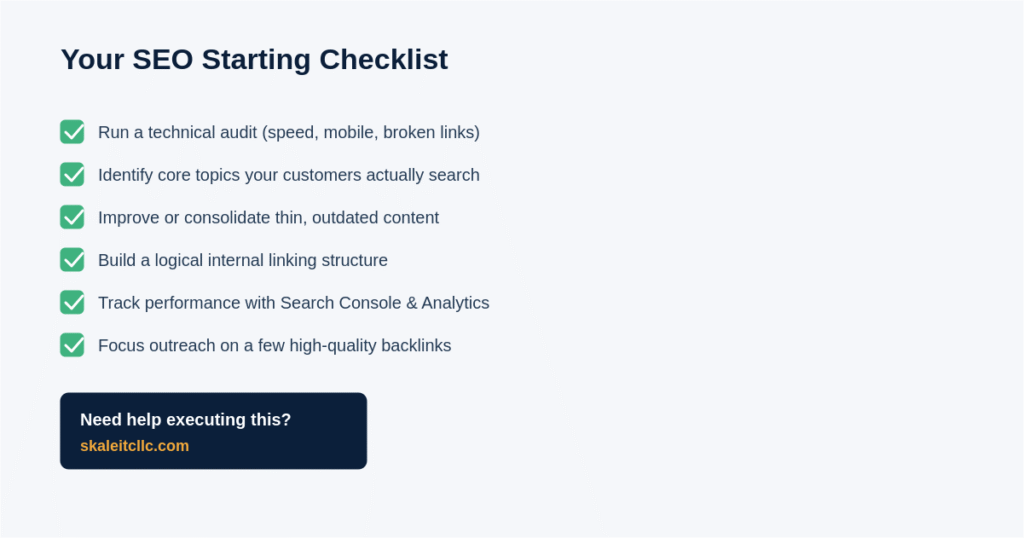
SEO in 2026 rewards businesses that build genuinely useful, technically solid websitesnot those looking for shortcuts. The strategies that used to “game” search engines have mostly stopped working, while real expertise, clear structure, and a fast, trustworthy website continue to compound in value over time.
At Skaleit LLC, we help businesses local and international build websites and SEO strategies that are made to last, not just spike temporarily. If you’re ready to grow your organic traffic the right way, get in touch with our team.